October 2026
Leporello at Polycopies
This year, too, we are happy to be back at Polycopies, our favourite boat on the river. For this edition we have prepared a selection, as always, with a focus on Italian photography, and we have organized not only book signings with a number of authors, but also opportunities to meet wonderful publishers and curators whose work we have long admired, and who will spend a few hours behind the table with us to talk and exchange ideas with you.
Check out our schedule of book signings and meet-the-publisher sessions.
Thursday November 12th
17, Meet the publisher:
Michela Palermo, Palermo Publishing
18, Meet the publisher + book signing:
Fabio Barile, Ashes, Alessandro Dandini De Sylva, Fortuna, Domingo Milella. Liminal, Aniene
19, Book signing:
Matteo De Mayda and Giovanna Calvenzi, Visual experiments together with communities hit by Vaia,
bruno editions
Friday November 13th
17, Meet the publisher + book signing:
Martha Micali e Klim Kutsevskyy, Dialogues on Becoming Matter, DITO publishing
18, Book signing:
Lisa Andreani, Alberto Grifi. Corpo Sospeso, VEII
19, Book signing:
Andrea Savorani Neri, A ritroso, Cross-Looking
Saturday November 14th
17, Meet the publisher:
Allegra Baggio Corradi, Shibboleth
18, Book signing:
Carlo Barrantes, Temples, self published
19, Book signing:
Valerio Di Mario, Figure, Atelier Tatanka
***
Palermo Publishing is an independent press founded in Palermo in 2022 by artist and researcher Michela Palermo, who leads its creative direction. Working between Palermo and New York, the press explores contemporary book culture through a poetics of the margin, developing projects in close dialogue with artists, archives and institutions. Each publication is conceived as an extension of the artist’s or archive’s work, with particular care for form, materials and the ways a book circulates: fairs, independent bookshops, readings and public programs. Recent collaborations include Allen Frame, Dietmar Busse, Lucia Pescador, Steve Turtell, Aterraterra and the Museo Civico di Castelbuono.
Steve Turtell, Portraits and Places
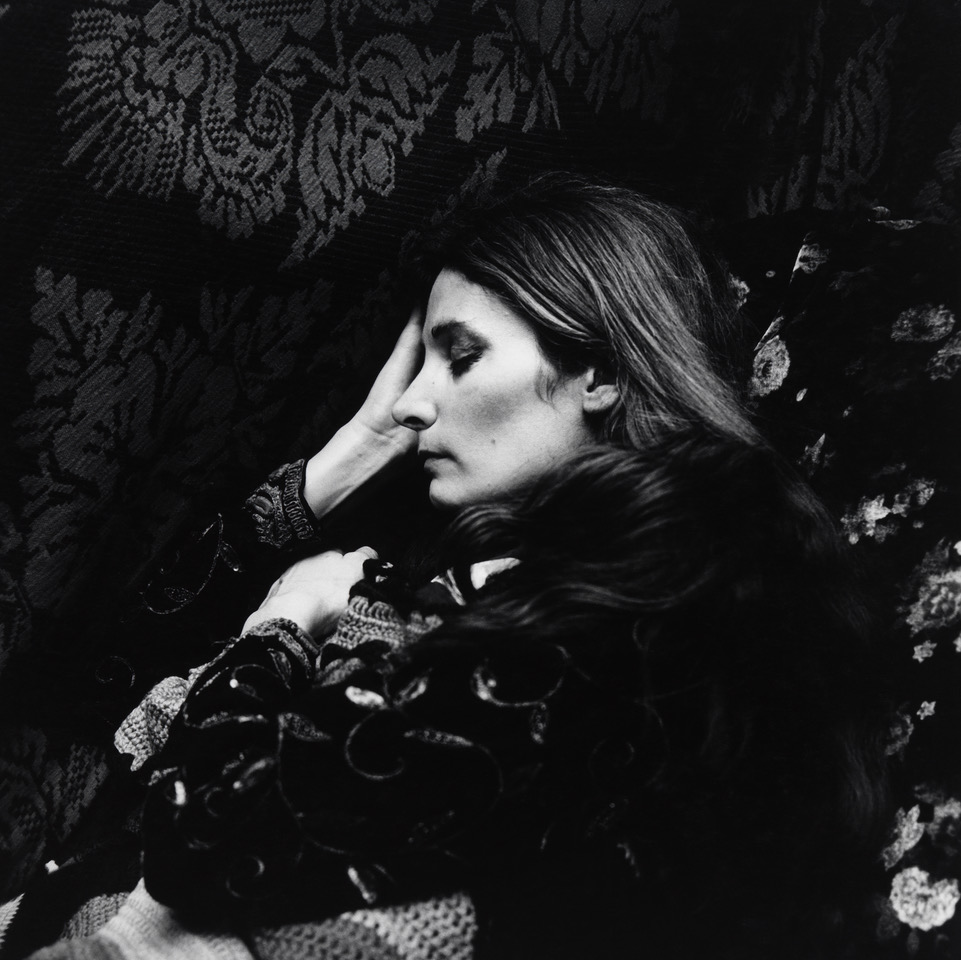
Portraits and Places is the first prose collection by New York-based writer Steve Turtell. Through autobiographical essays written over several decades, it reconstructs a network of relationships, places and encounters within the artistic and queer subcultures of 1970s and 1980s New York. In each chapter, personal memory meets collective history, and writing becomes a way of remembering, a form of creative archiving. The texts are interwoven with photographs by Peter Hujar, whose portraits appear as presences belonging to the same world.
Steve Turtell is a poet and writer born and raised in Brooklyn. He is the author of the poetry collection Heroes and Householders, praised by Marjorie Perloff, and he directed public programs at the Museum of the City of New York, the South Street Seaport Museum and the New-York Historical Society, where he oversaw programming for eighteen photography exhibitions. His chapbook Letter to Frank O’Hara won the 2010 ReBound Chapbook Prize from Seven Kitchens Press. He met Peter Hujar in 1971, when he was 21 and Hujar was 37. He contributed a text to the Aperture monograph Peter Hujar: Speed of Life. Portraits and Places (Palermo Publishing, 2025) is his first prose collection.
Peter Hujar was born in Trenton, New Jersey, in 1934 and grew up on a farm with his Ukrainian grandparents. He was a leading figure of the downtown New York scene of the 1970s and ’80s, and his black-and-white portraits of people, animals and landscapes, together with his documentation of the HIV/AIDS epidemic, were deeply influential. His books include Portraits in Life and Death. He died of AIDS in 1987. Underappreciated during his lifetime, he is now recognised as an icon of the downtown art scene, and his photographs are held in collections around the world.
Viaggio in Sicilia di Lisetta Carmi
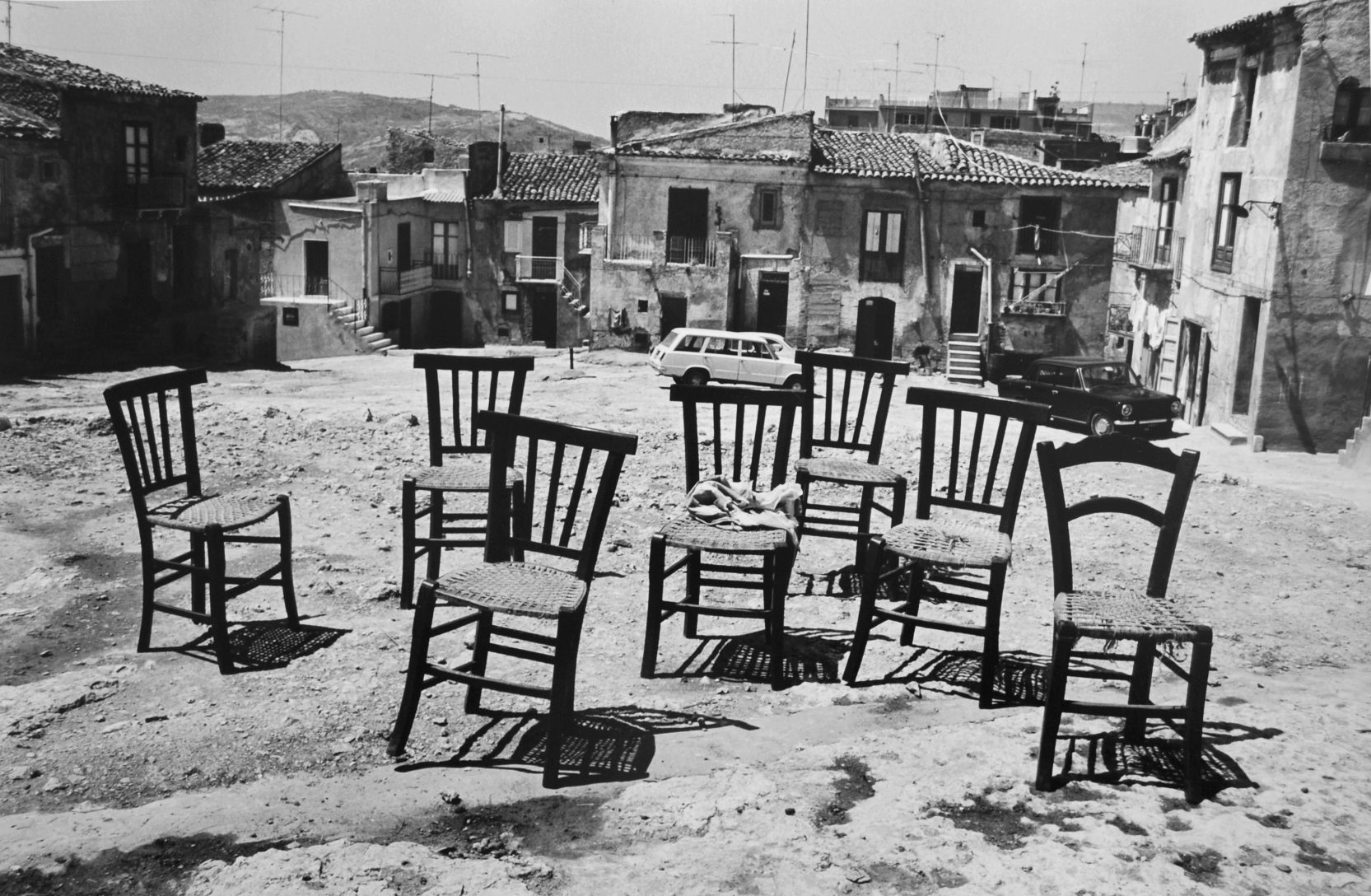
Viaggio in Sicilia di Lisetta Carmi brings back the last photographic reportage by Lisetta Carmi (Genoa, 1924 – Cisternino, 2022). It was commissioned in 1977 by the Dalmine company, first published as Acque di Sicilia, and accompanied by a text by Leonardo Sciascia. Carmi turns away from the postcard coastline and looks inland, at rivers, aqueducts, reservoirs and the rural communities whose lives depend on them. With her quiet, radical empathy she shows a Sicily of dignity and intimacy, where people and landscape are bound together. Today, in a time of climate crisis and fragile infrastructures, that attention feels more urgent than ever. Curated by Valentina Bruschi and commissioned by the Museo Civico di Castelbuono, with texts by Laura Barreca, Valentina Bruschi, Maria Rosa Sossai, Giovanni Battista Martini and Leonardo Sciascia.
Lisetta Carmi was born in Genoa in 1924 into a bourgeois family of Jewish origin. She first trained as a concert pianist. She discovered photography in 1960, during a trip to Puglia with the ethnomusicologist Leo Levi. Her work focused on existential marginalisation, bearing witness to subalternity and poverty with respectful participation and deep human interest. Her projects include the Port of Genoa and the book I Travestiti (1972), along with long journeys through southern Italy, Sardinia and Sicily. She later left photography to build the temple of Cisternino, completed in 1986. From 2005 her work received renewed attention and was widely exhibited. She died in Cisternino in 2022.
Dietmar Busse, Songs for Birds and the Lonely, 2024
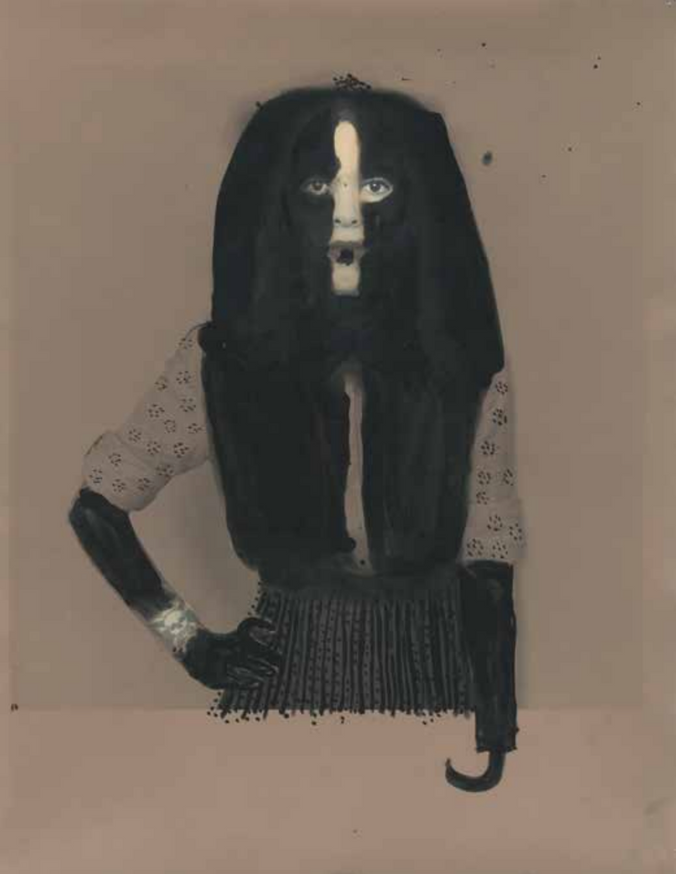
Dietmar Busse, who currently resides and works in New York, was born in Stolzenau, Germany. He first encountered the world of photography in Madrid as a young man before moving to New York in 1991, where his work has continued to evolve and captivate audiences worldwide. Songs for Birds and the Lonely is a tribute to Busse’s remarkable ability to capture the delicate interplay between solitude and connection, nature and the human gaze. Through his lens, portraits are transformed into profound visual poetry, reflecting a deep sensitivity to his subjects and the world he depicts around them. This book offers a compelling collection of images that resonate with haunting beauty and a quiet sense of introspection, showcasing Busse’s extraordinary talent in contemporary portraiture.
Dietmar Busse is based in New York. His work has appeared in magazines such as Elle, Frank, It, Harper’s Bazaar, Out, Paper, Surface, Trace, Visionaire, Vogue, and the New York Times. He has developed campaigns for Matsuda and documented runway shows for Bernadette Corporation, among many others. Recent exhibitions include the solo show Garden at Fierman (2023) and Labor of Love at Rachel Uffner Gallery (2023), both in New York.
ALBUM 900 — Lucia Pescador
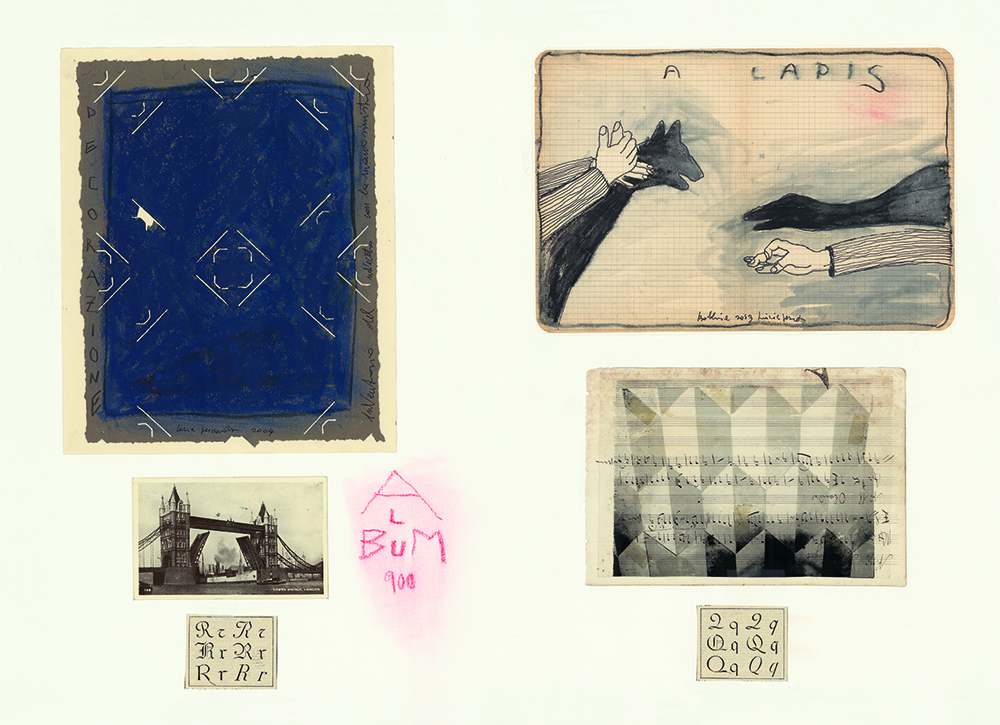
ALBUM 900 is a journey through Lucia Pescador’s personal rereading of twentieth-century art and culture, part of an inventory of images and drawings she has kept building since the 1990s. To stay close to the fluid, open way she works, this first printed selection is unbound, in an edition of 700 copies. The plates are reproduced in full. They can be read as double pages or as single sheets, taken out and recombined into new sequences and associations. In this way the book becomes, like her work, relational and polyphonic. Edited by Marta Sironi.
Lucia Pescador was born in Voghera in 1943 and studied at the Brera Academy. She has exhibited in Italy and abroad since 1965, always favouring drawing in all its forms. In the 1990s she began Inventario del Novecento con la mano sinistra, a collection of drawings and objects in continuous evolution, which led to her Crocevia, walls of drawings, photographs, blackboards and objects.
***
Aniene is an editorial project conceived in 2021 by artist and curator Alessandro Dandini de Sylva in collaboration with designer Filippo Nostri, focusing on books by artists, curators and independent cultural spaces present in Rome or with a special relationship with the city.
Alessandro Dandini de Sylva, Fortuna
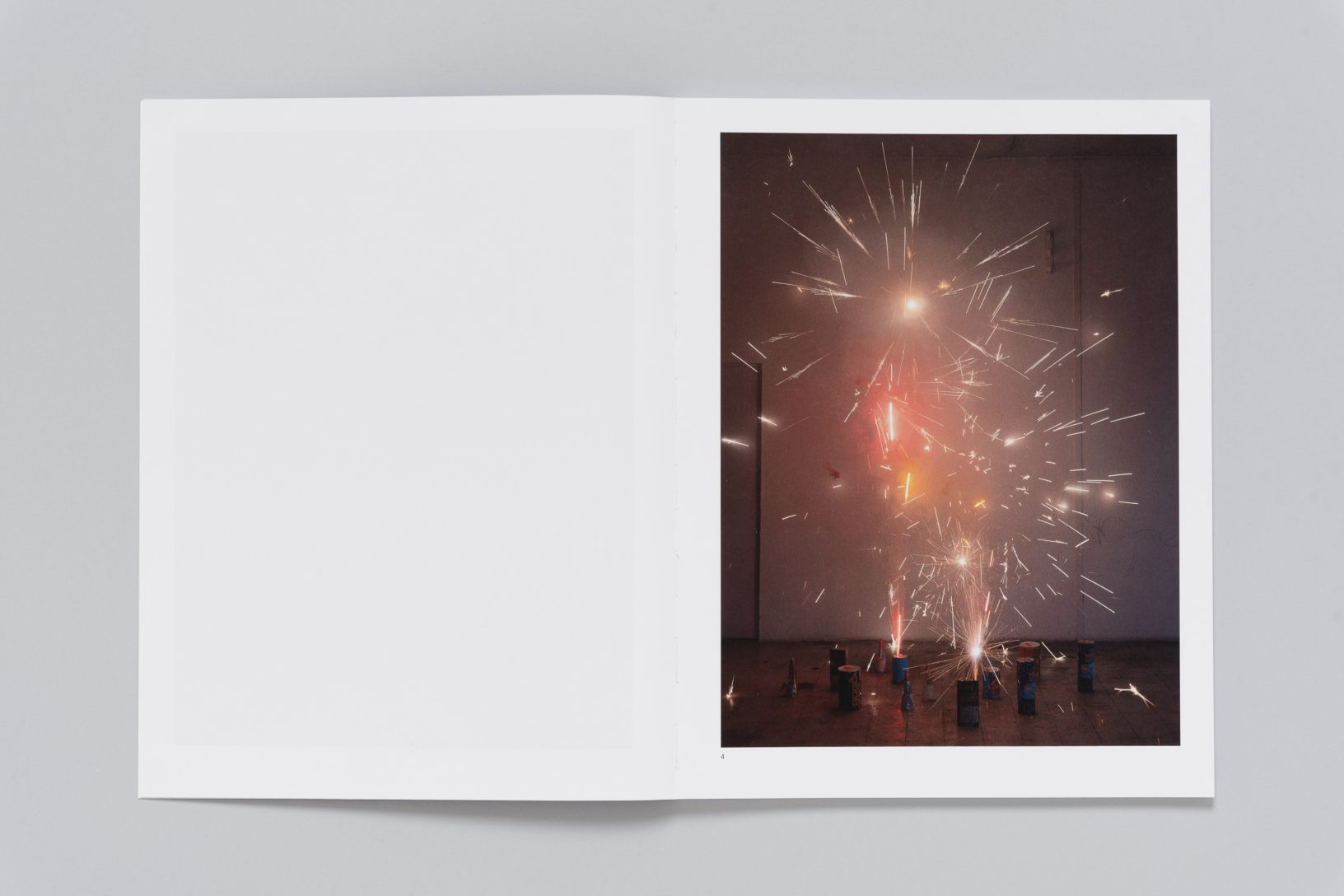
Fortuna documents a fireworks session carried out by Alessandro Dandini in his studio as part of the programme Scegliere una maniera felice (Paese fortuna, December 2023). The action belonged to a series of interventions conceived together with José Angelino, Marco Emmanuele, Luca Grechi, and Diego Miguel Mirabella to bid farewell to the spaces of the former wool mill on Via di Pietralata in Rome, inhabited and transformed over more than a decade of shared work. The book builds a sequence suspended between document and abstraction, accompanied by a text by Domingo Milella.
Domingo Milella, Liminal
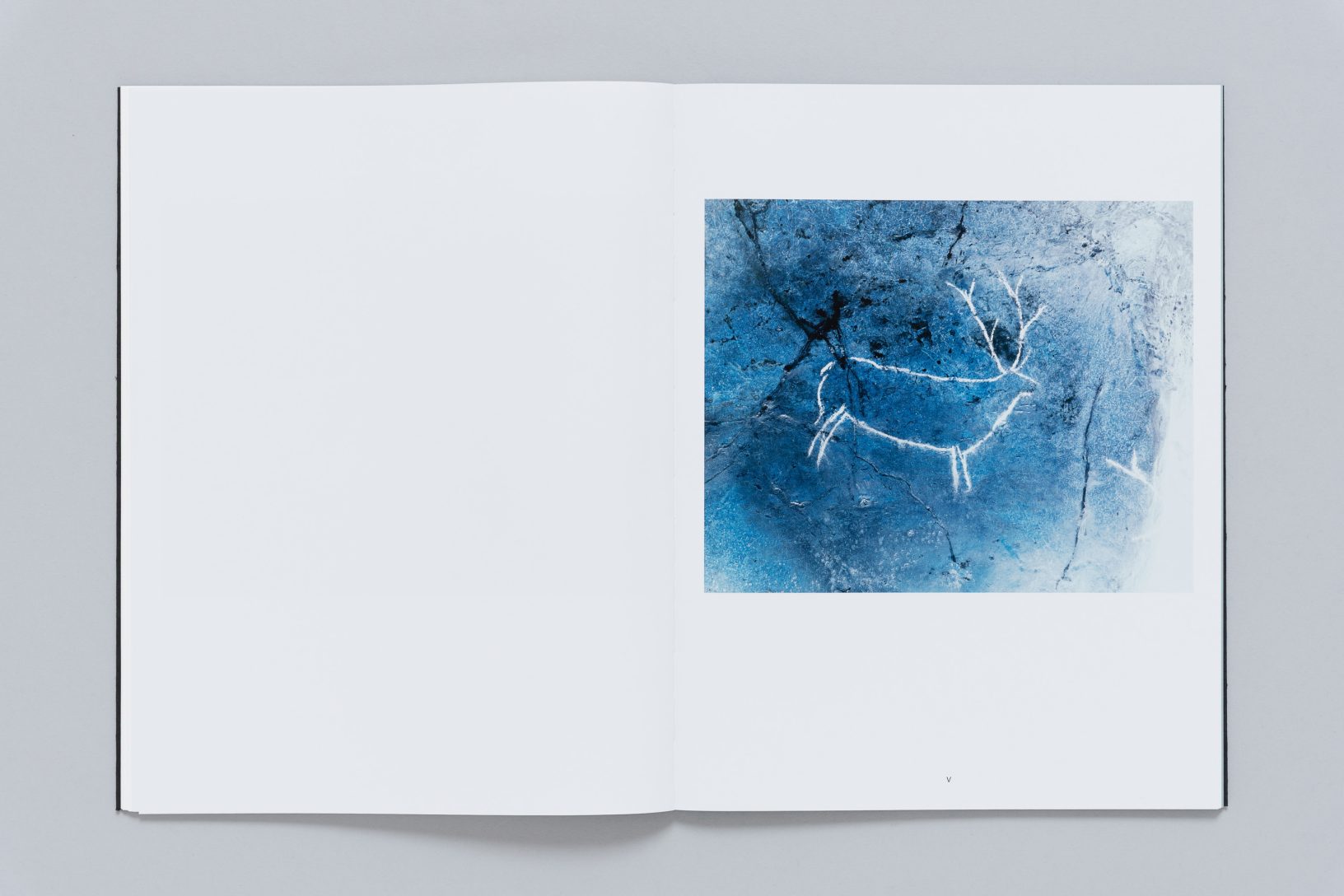
Liminal accompanies Domingo Milella’s exhibition at Sotheby’s Grotto in Hong Kong and brings together images from a body of research that has led the artist back to the origins of art and symbolic thought. Since 2016, Milella has entered some of Europe’s most important Paleolithic caves, travelling through time and into the deepest chambers of the earth. Among signs, handprints, geometries, and animals traced by distant hands, the cave appears not as an archive of the past, but as a threshold: a place where time folds in upon itself and figures preserved in stone continue to speak from the depths of millennia, carrying fears and questions that remain our own. The publication includes texts by Nicolas Chow, Domingo Milella, and Elke Seibert.
Fabio Barile, Ashes
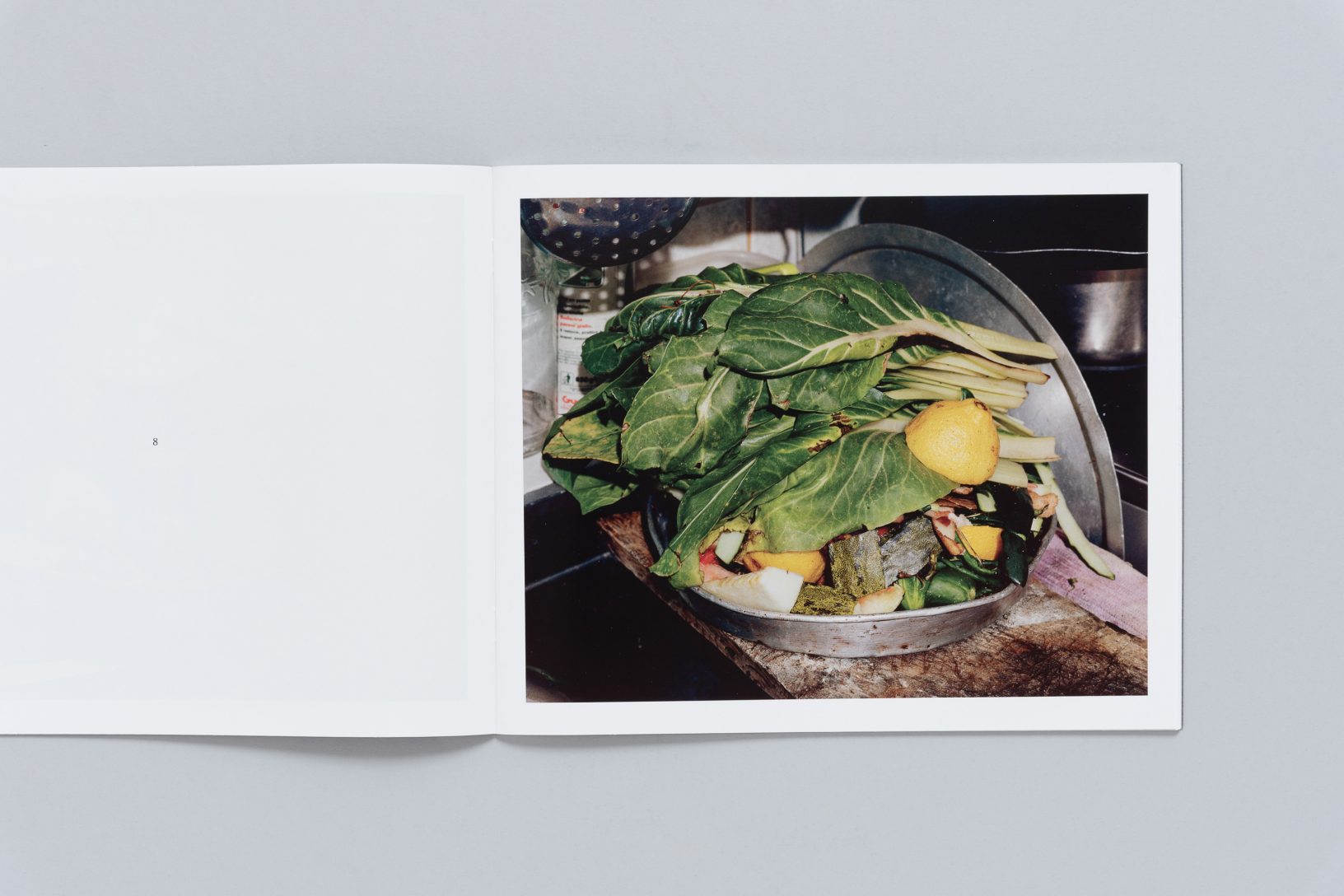
Ashes brings together a series of photographs made by Fabio Barile between 2019 and 2024 around a minimal and everyday gesture. In a corner of the kitchen, an aluminum plate quietly gathers the day’s leftovers: lemon rinds, prickly pears, cucumber peels, tomato skins, watermelon rinds, and scraps of meat, all haphazardly piled together. These remnants are later fed to pigs and dogs, according to a ritual that repeats itself every day, giving rise to a scene that is at once constant and ever-changing. This practice becomes an ode to the peasant tradition of reuse and to the continuous metamorphosis of matter, where nothing is wasted and everything finds a new purpose.
***
Matteo de Mayda, Visual experiments together with communities hit by Vaia, bruno editions
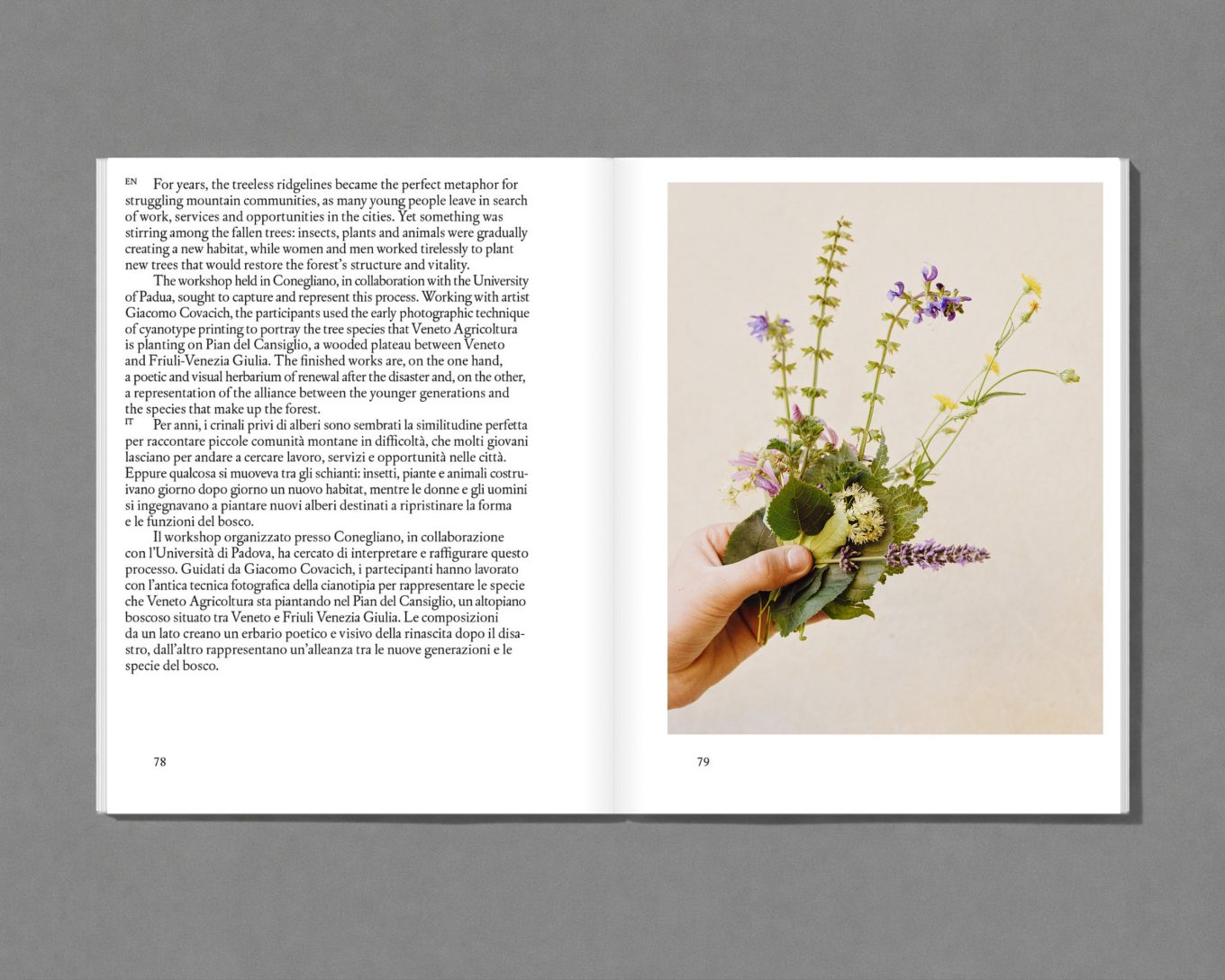
Eight years after Storm Vaia, photographer Matteo de Mayda, together with writer Cosimo Bizzarri, returns to the affected communities to offer residents the space and tools to tell the stories of and represent their own territory. During 2026, thanks to the Premio Basilico, de Mayda and Bizzarri involve around fifty teenagers aged between 13 and 18 in three workshops. Through mask-making, cyanotype printing and collage, participants are invited to connect their inner worlds with the landscape around them, intertwining memories of Vaia with reflections, confessions and dreams. The book brings the photographer’s images into dialogue with the visual experiments created by the young participants. By presenting the perspectives of the youngest members of these communities, the project offers a new and essential viewpoint, encouraging reflection on the consequences of the storm and the processes of recovery, which may only be fully assessed and understood over the course of decades. Published by bruno in 2026, the volume continues and expands upon the research begun with There’s No Calm After the Storm (2024).
Matteo de Mayda (born 1984 in Treviso) is a visual artist based in Venice. His practice focuses on socio-environmental issues through a formal and objective visual language, in dialogue with archival materials and scientific approaches. His work has been exhibited at the Venice Architecture Biennale, MUFOCO, Triennale Milano, CAMERA Torino, Fotografia Europea and the Design Museum in London.
bruno is a graphic design studio, publishing house and bookshop based in Venice, founded in 2013 by Andrea Codolo and Giacomo Covacich. The publishing house, launched in 2014, focuses on art monographs, photography books, and studies of performance art, architecture and contemporary publishing. Its catalogue brings together artists’ books alongside critical studies of performance and contemporary theatre in relation to the city. Rooted in the studio’s design practice, each book is approached as a project in which content and form are developed together, from the initial idea through layout and typography to production.
***
Martha Micali e Klim Kutsevskyy, Dialogues on Becoming Matter, DITO Publishing
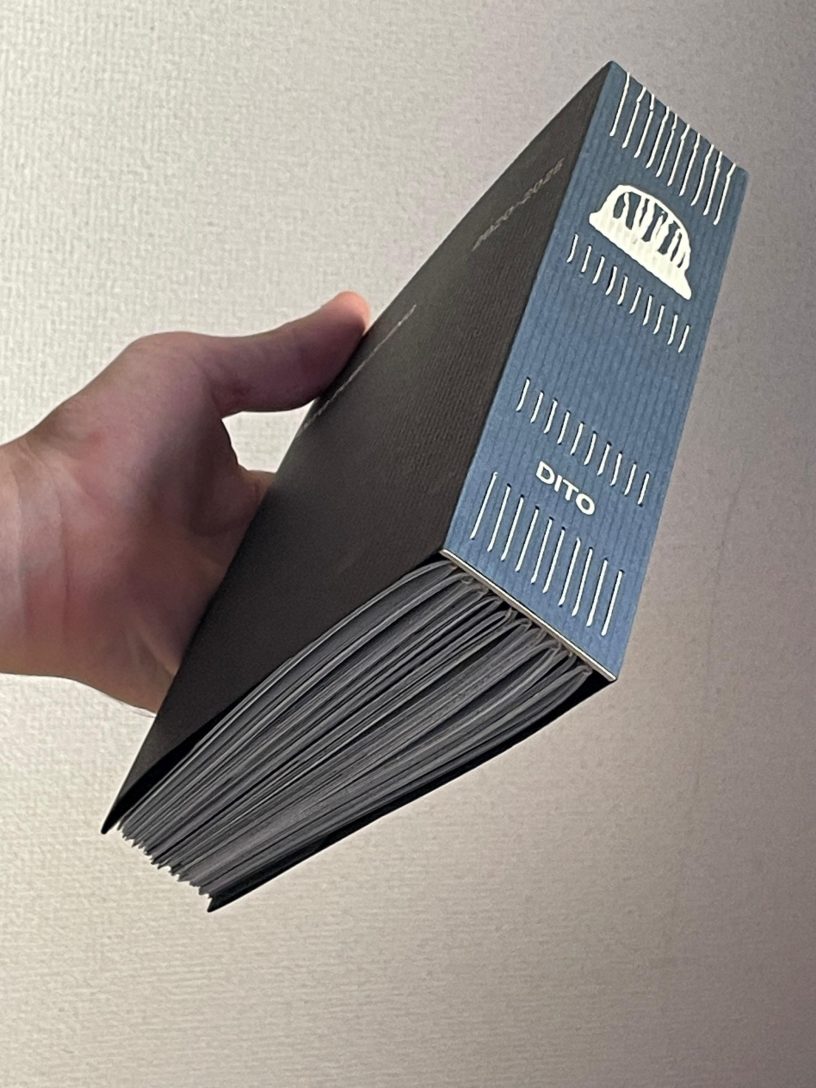
Dialogues on Becoming Matter is a four-handed artist’s book born from five years of visual exchange (2020-2025) between Martha Micali and Klim Kutsevskyy. The images are conceived as “pure signs”: open, potential entities that escape definitive interpretation and oscillate between emergence and subtraction. The book’s “dialogues” create a field of forces in which images react to one another like particles, allowing the organic and the inorganic, the natural and the artificial, the visible and the invisible to coexist in a layered flow. Photographs, paper works, collages and graphics are sequenced with no fixed states, with texts by Giuseppe Armogida and Bartolomeo Cafarella.
DITO Publishing is a publishing house based in Rome, founded in 2020 by Martha Micali and Klim Kutsevskyy as an extension of their artistic and editorial practices. It focuses on photography and the visual arts. It publishes artist’s books, monographs and catalogues, with the aim of creating a non-competitive, inclusive space that supports emerging authors and first-time publications. The Rome studio also hosts workshops, exhibitions, events and activities related to the book as a medium.
A ritroso by Andrea Savorani Neri, Cross-Looking
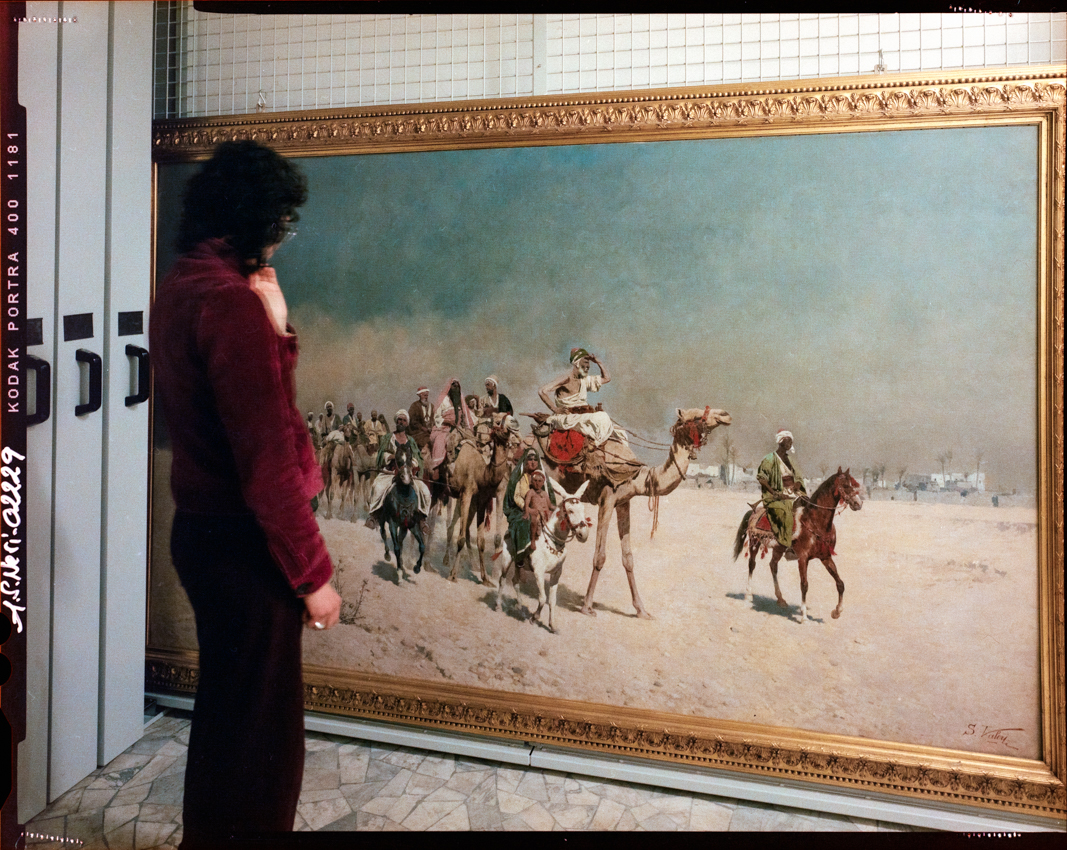
A ritroso is a visual and biographical exploration created by the photographer Andrea Savorani Neri as part of the European Cross-Looking project. The book captures the author’s journey to piece together his family’s history, weaving together private stories and historical events. The result of research that began in 2019, the photographs that make up the narrative were taken using a large-format camera, which allows for a direct connection to be established between contemporary and historical practice.
At the heart of the research lie the intertwined destinies of two of the photographer’s ancestors: Salvatore Valeri (1856–1946), an Italian painter who lived and taught in Constantinople for over forty years, and Gabriel Lekegian (1848/53–1921), an Armenian originally from Constantinople, brother of Valeri’s wife, who became a celebrated photographer in Cairo in the late nineteenth century. Moving between Italy, Istanbul, Cairo and Armenia, the fieldwork also reveals various historical insights. These include the attribution of the Bulgur Palas in Istanbul to Alessandro Valeri and the discovery of Lekegian’s grave in Geneva. The volume, with graphic design by Filippo Nostri, captures the experience of the first exhibition dedicated to this research; it contains reproductions of thirteen images accompanied by texts and a visual ‘map’ consisting of the 109 photographs selected by the curator Antonello Frongia. A 28-page booklet, stapled and softback. The book A ritroso was produced by Cross-Looking, a project funded by a Creative Europe grant and supported by a consortium of institutions based in Europe, Armenia, Turkey and Egypt: IUAV in Venice, the NOOR Foundation in Amsterdam, Université Paris Cité, the Organ Vida Festival of Zagreb, URF in Faenza, the National Gallery of Armenia, SALT online in Istanbul, the Italian Archaeological Centre in Cairo and AGBU in Cairo.
Alberto Grifi: Corpo Collettivo, curated by Lisa Andreani and Valerio Di Lucente, VEII
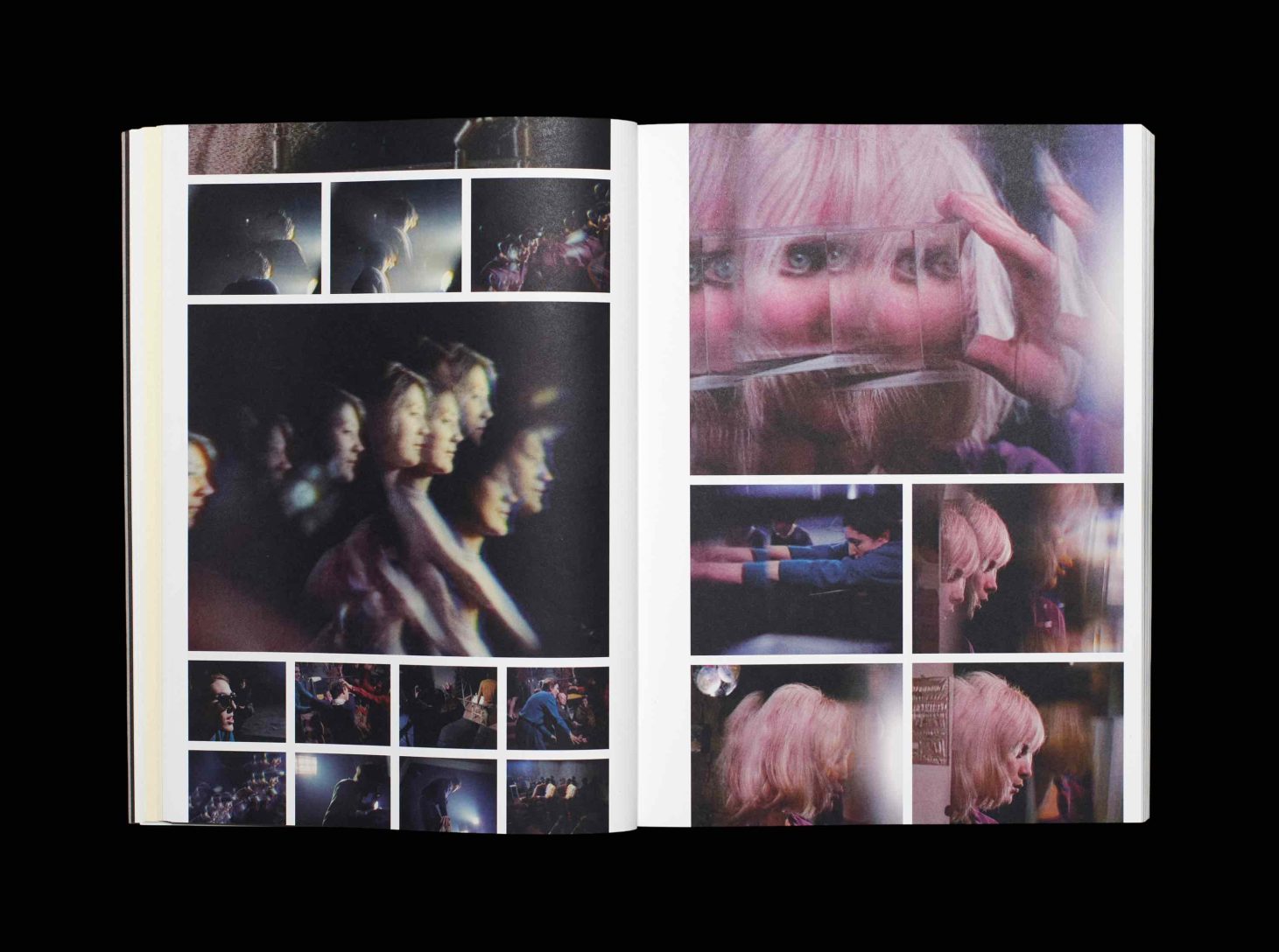
Alberto Grifi: Corpo Collettivo chronologically traces the filmic trajectory of the Roman director, widely regarded as one of the leading figures of Italian underground cinema. His work is marked by a strong political commitment, as well as a sustained interest in the expressive potential of technological media, where he developed new cinematic devices and tools. He gradually developed his research into a critical perspective against institutional repression. What emerges is a multifaceted portrait of an author who consistently operated outside official circuits, devoting equal intensity to both his artistic practice and to passing on a method and a stance to younger generations through his teaching. Conceived as a visual montage in which the films unfold alongside the reader, the volume is a homage to the organic nature of Grifi’s work. In traversing the films and scenes of his entire artistic production, it is possible to “revisit” and encounter fragments of previously made films, newly contextualised or completely transformed, leaving to memory the strength and ability to narrate them once again. Within this iconographic fabric are interwoven critical essays, first-hand accounts from interviews conducted during the research, and archival materials.
Alberto Grifi was born in Rome in 1938. A protean and nonconformist figure, he is regarded as one of the foremost exponents of Italian experimental cinema. His work is marked by a strong political commitment and a deep curiosity for the expressive potential of technological media. In this field, he distinguished himself by inventing new cinematic devices and instruments, such as the vidigrafo [kinescope] and the macchina lavanastri [magnetic tape cleaner/restorer].
Lisa Andreani is an independent curator and PhD candidate at IUAV University of Venice and Université Paris 8 in Paris. She is currently conducting research for the project Le musée vivant, investigating the interplay between living organisms and contemporary museum practices. She is also a fellow at Scuola Piccola Zattere with the project Drafting Coexistence: Porous Temporalities in Museum Space, which explores porous temporalities and multispecies cohabitation within museum environments.
Valerio Di Lucente is a designer, publisher, educator, and co-founder of Julia (2008–2023). In 2021, he launched Veii, a Rome-based publishing imprint devoted to visual culture and critical enquiries into art, photography, architecture & design.
Veii is a publishing imprint devoted to visual culture and critical enquiries into art, photography, architecture & design, focusing on upcoming and forgotten figures, blending past and future visions.
***
Shibboleth is a publishing cooperative founded in Milano in 2024, committed to socially engaged publishing and long-term research on language. It works with communities for whom language may become a barrier to knowledge, autonomy, or participation—including children in hospitals, migrants in job centres, and people in penal institutions—developing publications that function both as educational tools and artist’s books. These books serve as learning materials within their original contexts and are later transformed into installations and exhibitions, allowing their social content to be encountered within an art setting. This movement between practical use and artistic presentation highlights the lived realities that shape each project while foregrounding the publications as objects and devices in their own right.
Homographs. A Pictionary, 2025
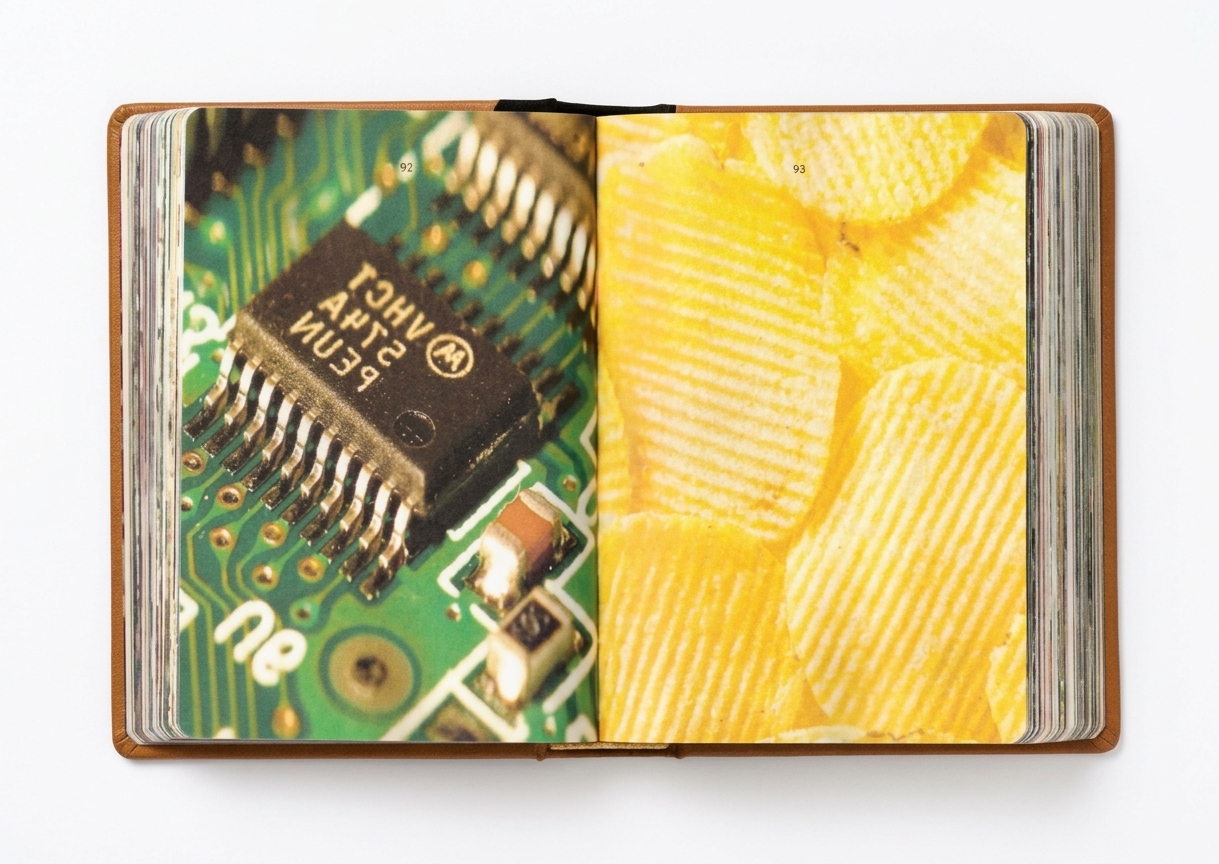
A visual dictionary for learning English through images rather than words. The book emerged from multi-year work with migrants learning English in the UK. Each selected word has at least two referents in the world, laid out across a spread to reveal the narrowness of language compared to the breadth of experience: cataract as eye disease and waterfall; bat as animal and sports tool; basket as woven object and sport; bark as dog’s sound and tree’s outer layer.
Thesaurus of Child Ecology, 2025
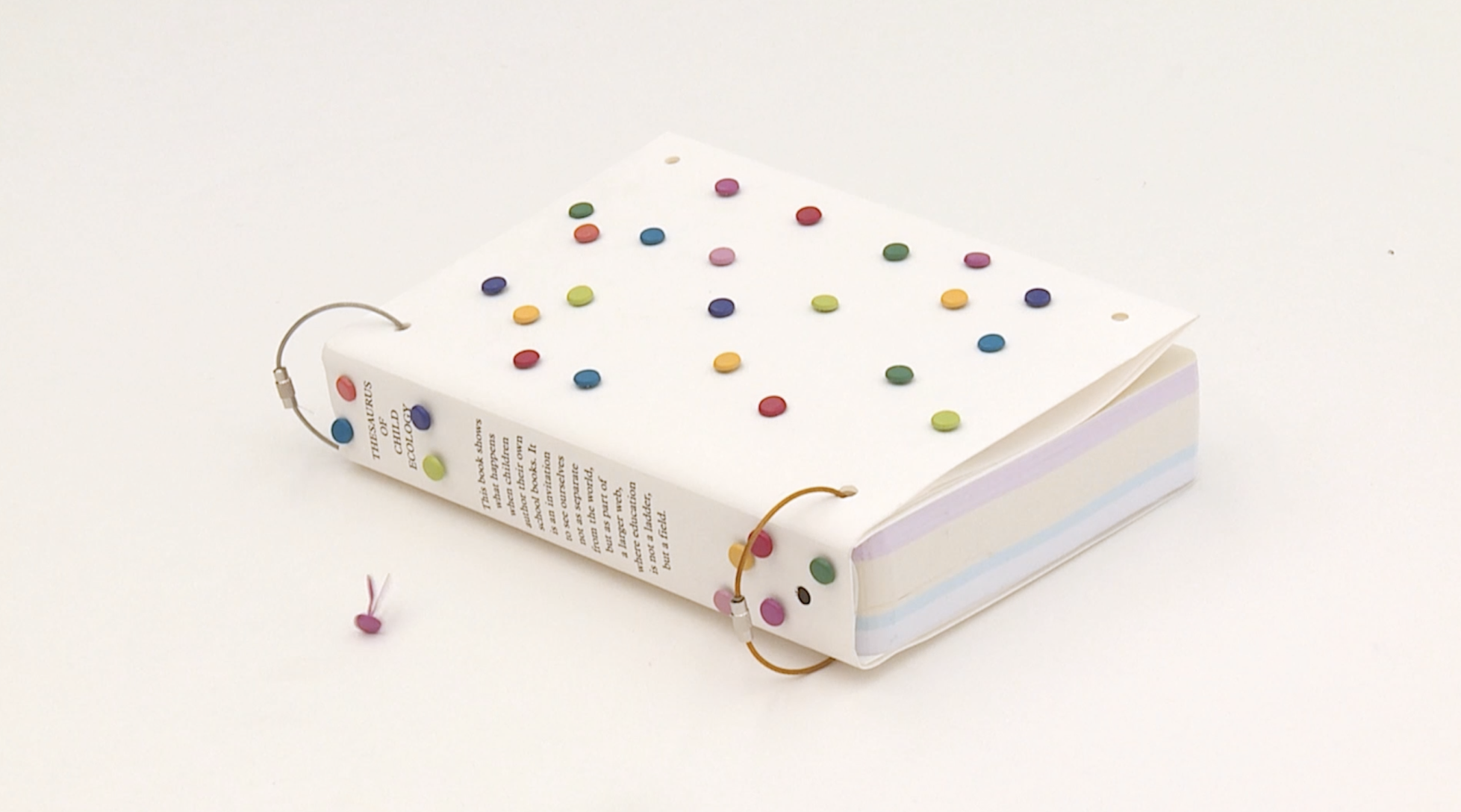
A book that shows what happens when children design their own school books. Created with a primary school class in Castiglione delle Stiviere (Mantova), the project explores how children imagine the form, feel, and function of their learning tools. The volume is a reader of ecology as understood by the children: a way to interpret the place where they will live their lives. It gathers all materials produced during two years of shared learning, using images as an alternative entry point to knowledge. The book can be transformed into a wall tapestry using the coloured staple holders on the cover.
The Infinite Fanzine, 2026
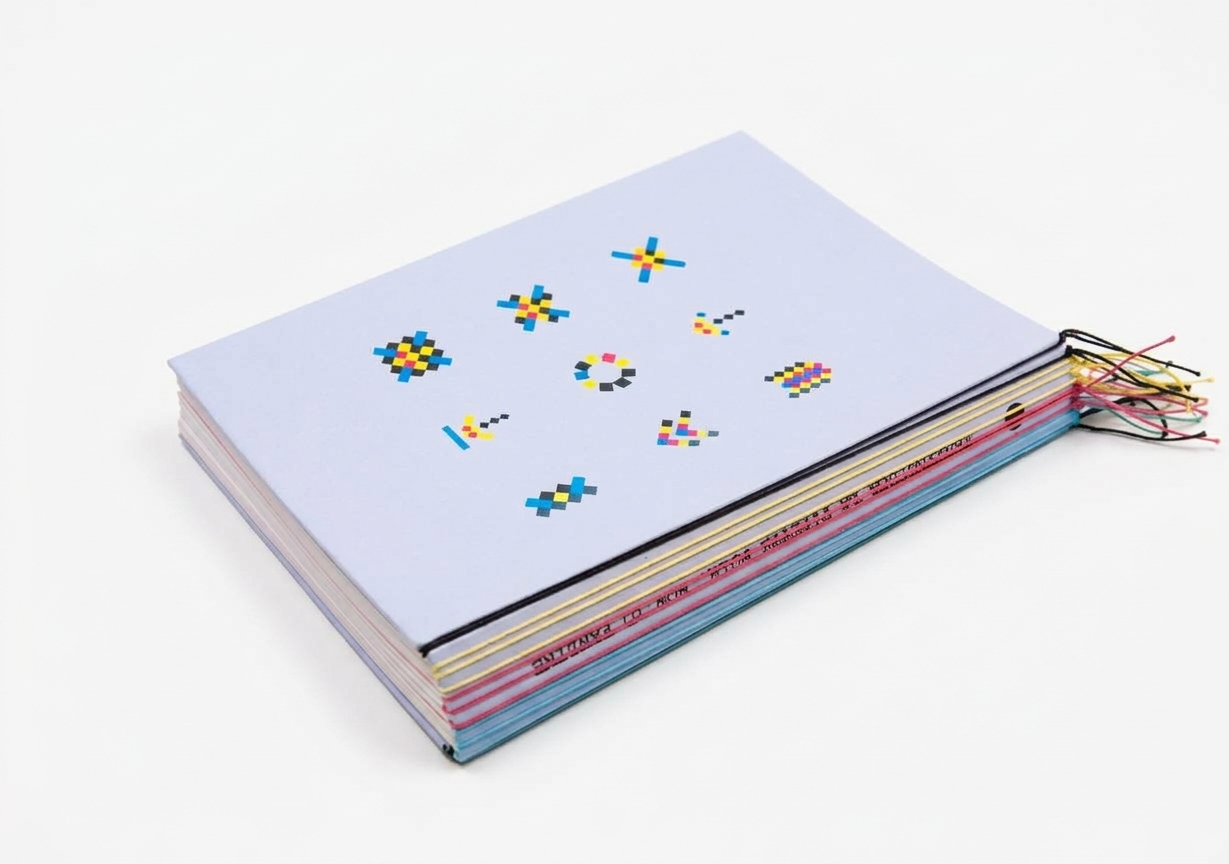
A workshop folded into a book. Designed as a masterflat that can be taken apart, photocopied, recomposed, and reshuffled into new publications – one volume generating infinite variants. The book gathers 13 signatures held to the cover by CMYK waxed cotton ribbons, easily removed for use in fanzine-making workshops. Eleven visual zines map the thematic constellations of Italy’s largest fanzine archive, La Pipette Noir (Civic Library of Calvairate, Milano): art, photography, activism, music, comics, narrative, poetry, recipes, DIY, role-play, and magazines. Each category reflects how these themes intersect with the history of the fanzine and with the role of self-publishing in cultural development.
***
Carlos Barrantes, Temples
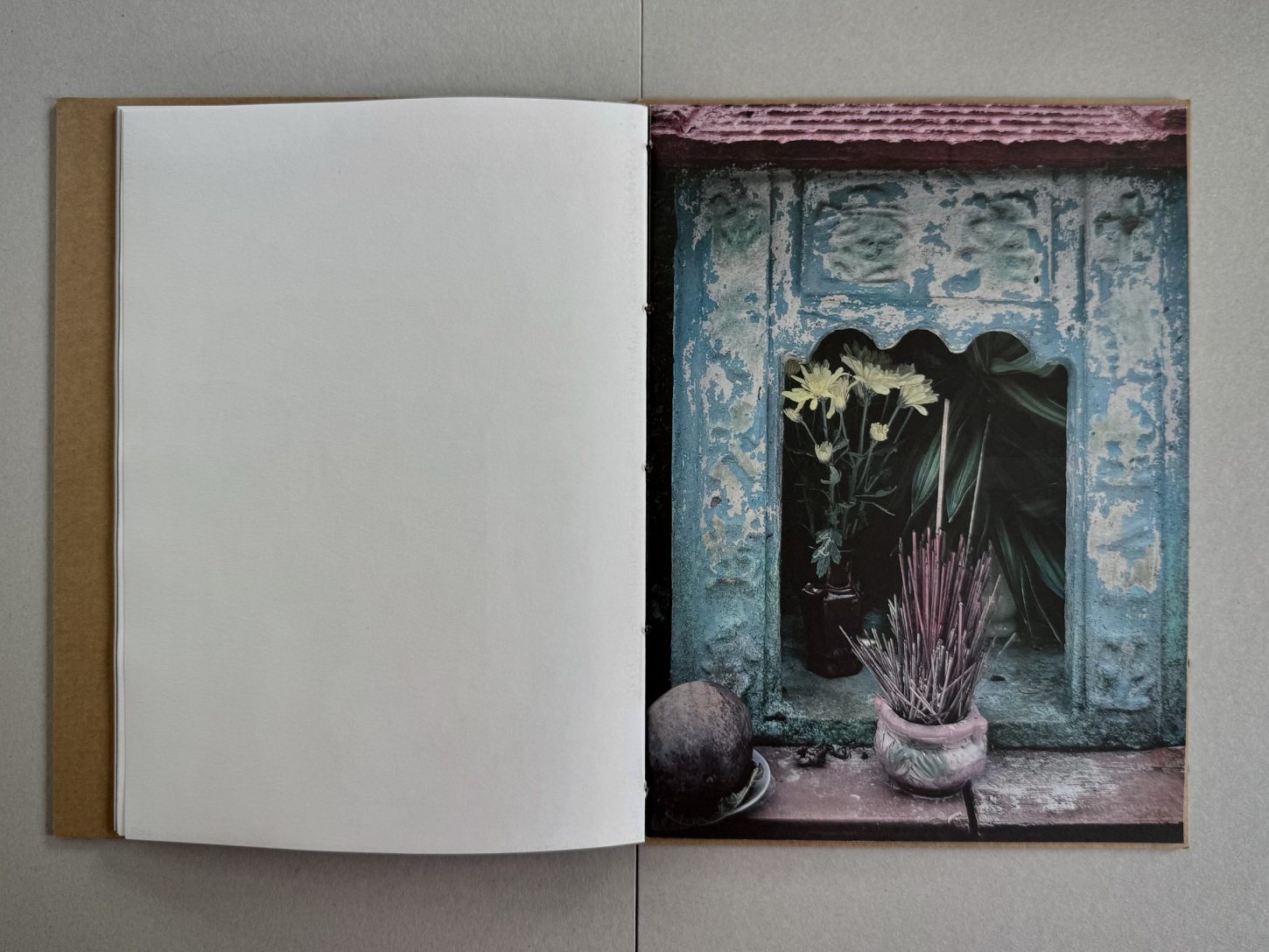
Temples was born out of an intimate experience: the loss of the artist’s mother. Faced with this loss, he felt the need to reconnect with the notion of ancestors, memory and traces.Through this photographic work, he seeks to explore the image’s ability to withstand the passage of time and become a form of presence in the face of absence. The works emerge from a sensitive artistic inquiry, in which each image is conceived as a space for contemplation, a territory between personal and collective memory. Temples thus offers a journey through four volumes —She Is Still Here, Sanctuary, Inhabited Infinity, Apu — accompanied by five totemic photographs —Kolossos — in which the image acts as a place of passage between disappearance and permanence. The use of engraving and printmaking extends this reflection: the matrix, marked andcarved into, becomes a metaphor for remembrance, while the print embodies its imprint.
Carlos Barrantes, born in Madrid in 1960, stands as a distinguished figure in the realm of photography, both as a practitioner and an educator. His work has been showcased since 1999 across Spain, France, and Russia. In 1993, Barrantes established his artisanal photographic workshop, specializing in platinotype and carbon paper printing. He innovatively combined these historical processes with a hybrid photochemical/digital method, later incorporating Fine Art/Digigraphie digital pigment prints. Initially based in Palma de Majorca, his laboratory relocated to Perpignan in 2006. From 1999 onwards, Barrantes has imparted his knowledge in Spain and France, teaching at esteemed institutions like the Ecole Nationale Supérieure Louis Lumière and the Ecole Nationale Supérieure de la Photographie d’Arles.
***
Valerio Di Mario, Figure, Atelier Tatanka
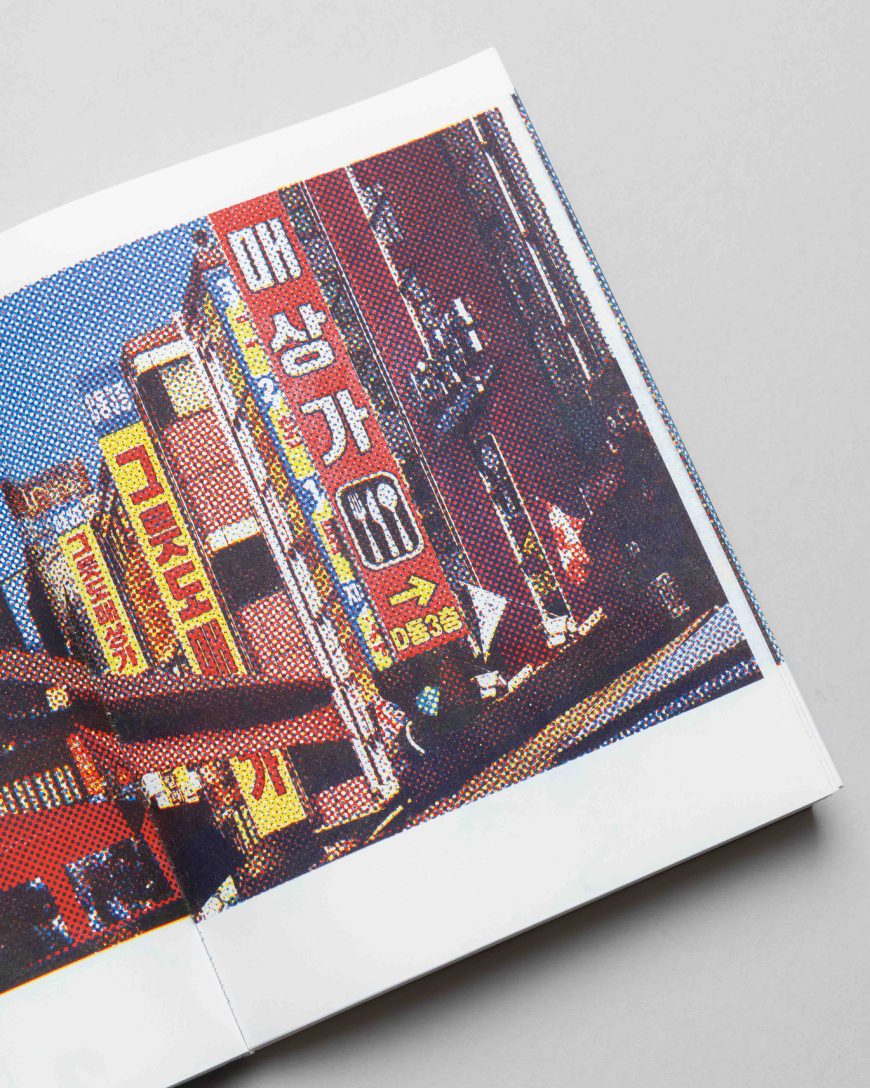
Figure is a research project investigating the use of photography as a narrative medium for documenting a journey. This issue presents a subjective perspective on travel through the interplay of data and photographs. Images collected between November 19 and December 2, 2023, in South Korea have been translated into a visual measure of personal experience. Each image is therefore inscribed with a dual meaning register: an emotional one, grounded in lived personal experience, and a functional one anchored in the data it encodes visually.
Valerio Di Mario is an independent art director and motion designer based in Turin. He works on visual systems that combine graphic design, typography, and motion, as well as editorial projects, identities, and data visualization, with an approach rooted in research, sequential storytelling, and experimentation.
Atelier Tatanka is a visual arts, graphic design and risograph printing atelier based in Bologna, Italy. The atelier deals with editorial, artistic and educational projects, with a focus on printed matter, participatory processes and self-publishing.
Hours and Infos
Thursday 12 - Saturday 15, 11 - 21
Sunday 15, 11 - 19
Bateau Concorde Atlantique, Paris